
Global Roaming Without the Shock: Why International eSIM Is the Future
International eSIM is the easiest way to stay connected across borders without fumbling with physical SIM cards. It works by letting you download a digital profile directly onto your phone, instantly activating local or global data plans. You can switch between carriers and countries in seconds, avoiding roaming fees while keeping your original number active for calls and texts.

Roaming Without Boundaries: A New Era of Global Connectivity
The constant hunt for local SIM cards at foreign airports fades into a memory when you embrace Roaming Without Boundaries: A New Era of Global Connectivity. With an international eSIM, your device simply awakens as you land, instantly linking you to a local network without the plastic card swap. This quiet shift transforms a frantic layover in Istanbul into a seamless moment: you finalize a Paris hotel booking while sipping airport coffee, your data plan already active. The era of inflated carrier fees and dead zones upon arrival dissolves. Now, crossing a border feels like shifting from one room to another in your connected life, where the concept of “overseas” loses its technical sting, leaving only the pure, practical reality of instant, boundary-less access.
What Sets Global eSIM Technology Apart from Physical SIM Cards
Global eSIM technology eliminates the physical card, allowing users to switch between international carriers without visiting a store or handling a tiny chip. Unlike a physical SIM, which ties you to one network until you swap cards, an eSIM lets you download and activate a local data plan remotely via a QR code or app. This enables near-instantaneous profile switching for travel, avoiding the hassle of buying, losing, or damaging a fragile plastic card. The remote provisioning of global networks means you can pre‑load multiple regional profiles and manage them through a single device interface.
Global eSIMs replace physical card swapping with remote, instant network switching across borders.
How Embedded SIMs Streamline Travel for Frequent Flyers
For frequent flyers, an embedded SIM (eSIM) eliminates the hunt for physical SIM cards at every new destination. You activate a local data plan before departure, ensuring instant connectivity upon landing. The process follows a clear sequence:
- Select and purchase an international eSIM plan via an app.
- Scan a QR code or enter details to install the profile.
- Switch between carrier profiles in settings upon arrival.
This removes airport kiosk queues and the risk of losing tiny SIMs during layovers. One eSIM can store multiple travel profiles, letting you switch networks mid-trip without visiting a Singapore eSIM store. Your phone stays ready for navigation, communication, and work from the moment the plane door opens.
The Mechanics Behind Staying Connected Across Borders
When you land abroad, staying connected relies on your phone seamlessly hunting for a local tower and swapping that signal onto your eSIM. You’re not physically swapping a card; instead, the eSIM holds multiple network profiles. Your device checks these against available carriers, then automatic network handover kicks in, linking you to a partner tower without you touching settings. Data flows through that local cell site, then gets tunneled back to your home provider’s servers via the eSIM’s remote SIM provisioning. This routing happens in seconds, so seamless cross-border connectivity feels like magic—just signal bars changing, no drop in service while your phone negotiates the best local path.
Activating a Digital SIM: Steps for Seamless Setup
Activating an international eSIM begins with purchasing a plan from a provider that supports your destination countries. Upon receiving the QR code or activation link, you must navigate to your device’s cellular settings and select ‘Add Cellular Plan.’ Scanning the code or downloading the profile triggers an automated network registration; ensure your device is connected to Wi-Fi during this step. Once added, label the line (e.g., ‘Travel Data’) and set it as your primary data source while keeping your home line active for calls. Finally, enable data roaming and manually select your network if the profile does not auto-connect. This sequence ensures seamless activation without service gaps across borders.
Compatible Devices and Operating System Requirements
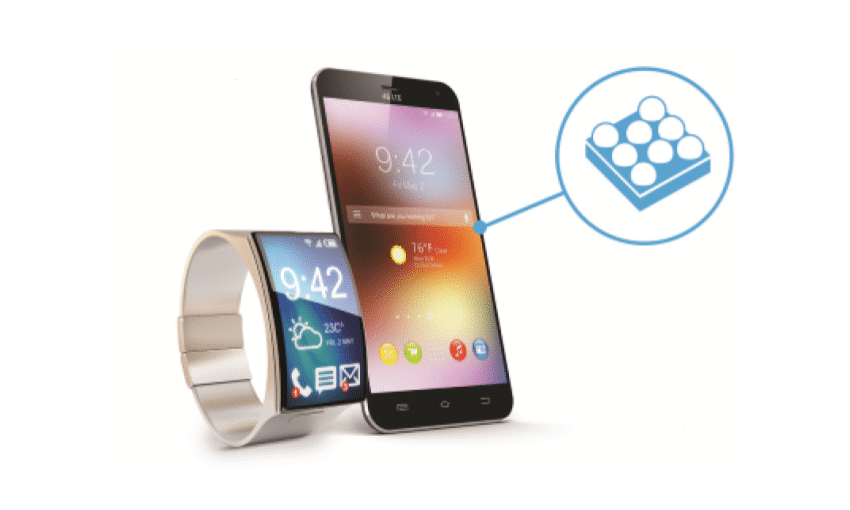
International eSIM functionality hinges strictly on device compatibility and operating system support. A device must be eSIM-compatible hardware, confirmed via the IMEI or manufacturer specs, with an unlocked SIM slot for carrier profiles. For iOS, models from iPhone XS onward (excluding some Chinese variants) support eSIM, requiring iOS 12.1 or later for profile management. Android devices require at least Android 9, though Samsung Galaxy S20+, Google Pixel 3+, and select newer models offer native eSIM capabilities. The activation sequence follows:
- Verify device unlocks and eSIM support in settings
- Check OS version and update if necessary
- Install carrier’s eSIM profile via QR code or app
Any device lacking these specific hardware or OS criteria cannot utilize international eSIM services.
Selecting the Right Provider for Cross-Border Data Plans
When you’re navigating a month-long assignment across three countries, the right international eSIM provider becomes your lifeline. I learned this the hard way after signing up for a flashy “global” plan that throttled my video calls the moment I crossed a border. Selecting the right provider for cross-border data plans means digging into the fine print: does the plan offer true multi-country coverage under one package, or will you need to buy a new eSIM at every airport? For me, the game-changer was a provider that let me manually switch networks on my phone to avoid patchy zones. A provider with a responsive live chat, not just a bot, saved me when I landed in a rural region with zero signal. Prioritize providers that advertise local network partners rather than “roaming zones,” and test their speed guarantees on a short trip before committing to a long-haul plan. The difference isn’t in the gigabytes—it’s in seamless connectivity.
Comparing Pricing Models: Pay-As-You-Go vs. Regional Bundles
When comparing regional bundles vs. pay-as-you-go for international eSIMs, the core trade-off is flexibility versus cost efficiency. Pay-as-you-go charges a fixed rate per megabyte, making it ideal for sporadic, low-data usage across multiple countries where a bundle would waste credit. Regional bundles offer a single price for a set data pool (e.g., 5GB across Europe), significantly lowering the per-gigabyte cost for heavy travelers. The logical decision sequence involves:
- Estimating total trip data consumption across all destinations.
- Checking if a regional bundle covers your specific countries without gaps.
- Calculating if the bundled price-per-GB is lower than pay-as-you-go rates for your usage volume.
- Factoring in bundle validity versus trip length to avoid expiration.
Coverage Maps and Network Reliability in Remote Destinations
When evaluating international eSIMs for remote destinations, a provider’s coverage maps for off-grid zones become your lifeline. Zoom into their interactive map to verify partner networks—spotty gray areas often mean no signal in valleys or along mountain ridges. User-generated reliability reports from hikers or sailors reveal real-world dropouts that glossy maps hide. Never assume a purple saturation equals seamless connection; cross-check against third-party field tests specifically for your planned route. A map promising “global reach” but lacking local roaming partners in the Patagonian steppe or Saharan dunes is a red flag.
Trust maps that show granular tiered coverage (e.g., 4G vs. basic SMS-only zones), not just country outlines, or you’ll face silent dead spots when you need directions most.
Practical Advantages for Business Travelers and Digital Nomads
For business travelers and digital nomads, an international eSIM eliminates the frantic hunt for local SIMs at airport kiosks, letting you connect the second you land. You keep your primary number active for calls and 2FA, while a data-only eSIM powers your laptop and hotspot for client meetings or co-working sessions. Switching between countries becomes seamless—top up or change plans via an app without visiting a store. This flexibility lets you bank a budget-friendly “local” data plan for a month in Bali, then instantly pivot to a global pass for a last-minute Dubai conference. No physical cards to lose, no roaming fees to expense—just reliable connectivity that travels with you.
Maintaining a Local Number While Using Global Data
For business travelers and digital nomads, an international eSIM allows you to keep your local number active for calls and SMS (often via VoIP or forwarding) while simultaneously using a separate global data plan on the same device. This eliminates the need to carry a second phone or swap physical SIMs. You receive verification codes and maintain contact with local clients or services, while your international data handles navigation, email, and app-based communication. The key is choosing a dual-SIM eSIM that does not require you to deactivate your primary number.
Maintaining a local number with an international eSIM ensures you remain reachable on your established line while using global data for internet access, removing the hassle of juggling multiple devices or SIM cards.
Dual SIM Functionality for Work and Personal Lines
For digital nomads, dual SIM functionality with an international eSIM transforms your phone into two separate devices. You can keep your home number for banking and family, while a local eSIM handles work calls and client messaging. This setup prevents blurring boundaries, as your work line stays active for urgent deadlines without interrupting personal downtime. Switching between profiles is instant, letting you answer a client’s Slack message on your business profile, then seamlessly toggle to your personal line for a friend’s text. No swapping physical cards, no carrying a second phone—just clean separation of your professional and private life.
Overcoming Common Hurdles in Worldwide Mobile Usage
Navigating a foreign city, your local SIM card becomes a ghost. The first hurdle is instant connectivity; an international eSIM solves this by letting you purchase and activate a data plan before your flight lands. Then comes the dreaded price shock from roaming fees—an eSIM allows you to compare and switch between local data packages from multiple providers inside a single app, avoiding old-school overcharges. Finally, juggling a physical SIM for your home number and a travel SIM creates chaos. An eSIM’s dual-profile capability keeps your home line active for banking codes while a separate digital profile handles local data, untangling the logistical knot of staying reachable without swapping trays.
Troubleshooting Activation Errors Across Different Carriers
When an eSIM fails to activate, first confirm your device is unlocked and the carrier profile matches your destination’s supported bands. Troubleshooting activation errors across different carriers often requires toggling Airplane Mode or manually selecting the network under cellular settings. If a QR code scan yields “invalid profile,” request a fresh activation code from your provider, as expired or region-locked profiles are common culprits. For persistent failures, check that roaming is enabled and the APN settings auto-populate correctly—manually entering the correct APN resolves many carrier-specific rejects. Finally, a device restart clears temporary provisioning glitches tied to the carrier’s remote activation server.
Managing Data Speeds and Throttling Policies Abroad
Managing data speeds and throttling policies abroad is critical with an international eSIM. You must scrutinize each provider’s fine print for fair usage thresholds that trigger speed reductions after a set data cap. Choose plans promising “true unlimited” high-speed data or explicit throttle limits (e.g., 256 Kbps after 30GB) to avoid frustrating slowdowns. Prioritize local-network partnerships over global roaming aggregates, as the latter often impose stricter throttling. Activate speed tests upon arrival to verify real-world performance. If throttled, switch eSIM profiles instantly via your device settings to restore fast connectivity without penalty.
Managing Data Speeds and Throttling Policies Abroad requires selecting eSIM plans with clear fair usage limits, testing local speeds promptly, and switching profiles when throttling occurs.
Security Considerations When Roaming with Embedded Chip Technology
The embedded chip in your device silently orchestrates international eSIM connections, but its security hinges on your vigilance. When roaming, the chip’s over-the-air provisioning creates a trust bridge between your phone and a foreign network—yet if that bridge is forged via an unencrypted public Wi-Fi hotspot during initial profile download, a malicious actor could intercept your authentication keys. I once watched a traveler’s eSIM profile get cloned mid-air in a Bangkok café because they validated the provider’s QR code over an open network. Q: How can a roaming attack occur through the embedded chip? A: By intercepting the unencrypted eSIM profile download or remote management commands on untrusted Wi-Fi. To stay secure, always download and install eSIM profiles over a known, private connection before departing, and disable remote profile management in your device settings while abroad—this locks the chip from unauthorized over-the-air swaps.
Encryption Standards and Virtual Network Protections
International eSIM security relies on robust virtual network protections and encryption standards to safeguard user data during roaming. The embedded chip uses AES-256 encryption for data at rest and TLS 1.3 for over-the-air provisioning, ensuring subscriber credentials remain unreadable to intermediaries. Virtual network protections create isolated, ephemeral tunnels between the device and the home carrier’s core network, preventing session hijacking on foreign infrastructure. This combination forces attackers to break both the encrypted channel and the virtualized network boundary simultaneously, providing multi-layered defense against unauthorized access to the eSIM profile.
Risks of Public Wi-Fi vs. Cellular Data Alternatives
When roaming abroad with an international eSIM, public Wi-Fi poses significant security risks compared to cellular data alternatives. Unencrypted hotspots are vulnerable to man-in-the-middle attacks, where hackers intercept your credentials or inject malware. Your eSIM’s cellular data, by contrast, uses carrier-grade encryption, making it far safer for banking or private logins. Relying on cellular data via eSIM eliminates the need to trust unknown network operators. Q: If my eSIM data runs out, is public Wi-Fi a safe alternative for checking email? A: No. Even email logins can be captured on unsecured public Wi-Fi; you should refill your eSIM data plan or use a VPN as a last resort.
Future Trends Shaping Cross-Continental Mobile Access
Future trends shaping cross-continental mobile access center on international eSIM enabling seamless multi-network switching. A key development is the rise of global connectivity hubs, allowing a single eSIM profile to dynamically authenticate with local carriers worldwide. This eliminates physical SIM swaps, while eSIMs will embed intelligent network selection based on real-time signal strength and latency, not just cost. Roaming will evolve into true local access, with eSIMs pre-caching carrier credentials for instant activation upon arrival. Integrated eSIM management in device operating systems will further streamline cross-continental access, letting users activate and control data plans directly from settings without third-party apps. These trends collectively reduce reliance on physical infrastructure, making mobile access across continents increasingly automatic and context-aware.
5G Integration and Its Impact on Seamless Roaming
5G integration fundamentally transforms roaming by enabling instantaneous network handovers between cross-continental carriers. eSIM profiles leverage 5G core network slicing to maintain dedicated bandwidth for voice and data, eliminating the typical latency spikes during border crossings. This architecture supports dual-connectivity, allowing your device to anchor to a home network’s 5G core while simultaneously accessing a local carrier’s radio. Seamless roaming becomes a zero-touch experience as 5G’s service-based interfaces pre-negotiate authentication in under 100 milliseconds. Beamforming and carrier aggregation ensure stable connections even when switching between spectrum bands across regions.
Q: How does 5G allow seamless roaming without re-authentication?
A: 5G’s Unified Data Management (UDM) function stores your eSIM profile globally, so your device roves between towers using token-based re-authentication that requires no manual network search, unlike 4G’s periodic registration resets.
Evolving Regulations for Carrier-Independent Services
Evolving regulations for carrier-independent services are shifting from static agreements to adaptive compliance frameworks. Users now encounter localized data handling rules that vary by transit country, requiring eSIM providers to dynamically adjust routing and storage protocols. This forces platforms to verify real-time jurisdictional compatibility before connecting to a network, balancing performance with legal constraints. As rules fragment, the practical outcome is that international coverage becomes less about roaming deals and more about per-session network vetting, directly impacting connection reliability and transparency for the end user.
What Makes a Global eSIM Different From a Physical SIM

How it stores multiple operator profiles on one chip
The difference between eSIM and roaming with your home carrier
How to Activate a Worldwide eSIM Plan Before You Travel
Scanning a QR code or using a provider app